
Planning
Planning
Case Studies of Value Uplift in Oxfordshire & Comparable Regions

Will Mallard
Real Sites, Real Returns — How Planning Gain Works on the Ground
We’ve covered the theory: how planning gain works, why it matters in Oxfordshire, and what costs and policy hurdles affect your returns.
Now let’s get into the part that really brings it all to life — real examples of how planning permission and smart local strategy can create significant value uplift without breaking ground.
This article walks through four planning-led case studies — three from Oxfordshire and one from a comparable growth area — to show you how the uplift is created, captured, and protected.
Why does this matter for investors? Because it shows that when done right — with local insight, cost control, and planning clarity — your capital backs real value, not vague upside.
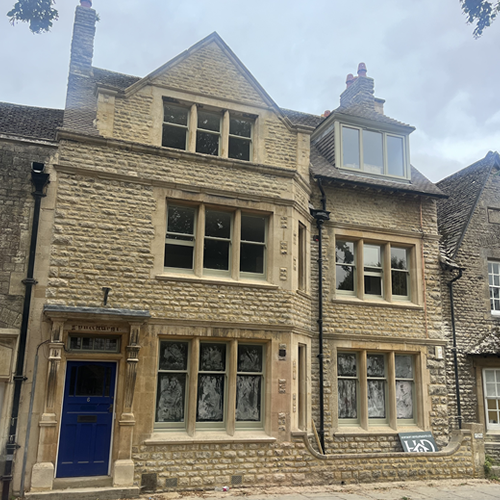
1. Henley: Office Conversion to Residential
Before: - 4-storey office in central Henley, that had previous residential usage but currently used as offices, underutilised - Purchased for £600,000 (existing use value)
Strategy: - Change of use to residential via planning application - Design-led conversion into a beautiful 3 bedroom home.
Costs & Outcomes: - Planning & professional fees: £35,000 - Refurbishment & works: £160,000 - GDV (post-planning): £1.25M
Uplift: - ~£200k gain from change of use alone - No new structural work required, no digging holes in the ground - Rental fallback in case of sale delays
Investor Protection: - Money lent to development holding company as to not have all eggs in one basket AND at same level as the developers (who get paid AFTER the investor return of capital and return on investor capital) - Exit plan: sale via local agency - Local team with prior Henley approvals and initial assessment input equals reduced permission risk.
2. Kidlington: Large Garden Plot to 2 Dwellings
Before: - 1950s Semi-detached house on deep plot, calm street setting - Existing value: £400,000
Strategy: - Subdivide garden, apply for permission for 2nd detached dwelling - Retain original house with minor renovations
Costs & Outcomes: - Planning & legal: £25,000 - Build for new home: £210,000 - GDV combined: £950,000–£1,000,000
Uplift: - £250k+ value creation through planning and infill strategy
Investor Risk Management: - Planning secured before capital deployed - Low build risk (standard detached house) - Strong fallback: sell main house alone if needed
Why It Worked: - Local awareness of precedence in surrounding plots - Sensible design respecting street pattern - Clear pre-app guidance from Cherwell District Council
3. Oxford: Retail Unit with Flat Above → 2-Unit Residential
Before: - Tired shop with vacant flat in secondary retail area - Purchase price: £350,000
Strategy: - Change of use for ground floor retail to residential - Convert to two flats, modernise upper floor
Costs & Outcomes: - Planning & works: £160,000 - Final GDV: ~£625,000
Planning Gain: - ~£115,000 value uplift from planning permission alone - Uplift increased further after works completed
Investor Protection: - Works funded in tranches - Rental fallback value of £2,300/month - Conservative planning assumptions — no speculative massing
Key Insight: This site would have been unviable without the planning gain. The math didn’t work until the retail-to-resi permission was secured — a clear case of “when the math don’t math” until you unlock policy value.
4. Comparison: Cambridge Edge (East-West Rail Corridor)
Before: - Agricultural paddock near new transport corridor - Purchased as strategic land for ~£80,000/acre
Strategy: - Promote through local plan - Achieve allocation for 5 dwellings over 4 years
Outcome: - Post-allocation value = £650,000–£700,000/acre - Exit via sale to SME developer
Planning Gain: - ~8–10x land value uplift from planning permission
Investor Learning: - Long timelines, but extremely high return potential - Higher risk (policy, politics, timeline) - Not suitable for short-term capital
Contrast with OLD-Homes Model: - OLD-Homes focuses on 3–24 month deals - Uses infill and brownfield plots with faster planning cycles - Leverages local supply chain and exit partners to de-risk
Key Investor Lessons
Across these examples, a few truths emerge: - Planning gain is real — but only when local insight guides it - Design, pre-apps, and council relationships matter more than spreadsheets - Obligations, policy and cost creep can erode upside fast - Fallbacks and phased capital help protect your funds
That’s why OLD-Homes only moves forward when: - Uplift is realistic and based on precedent - Policy costs are modelled and managed - Investors get clear security and structured updates
This is not theory — these are the fundamentals of modern private investing in Oxfordshire.
Call to Action
Want to see real uplift deals we’re currently structuring in Oxfordshire? Request our Live Case Study Deck or book a 1:1 investor call to walk through projects step-by-step.
Next in the Series:
Risk, Sensitivity & Mitigation in Uplift Deals